Plasma Cutters
Hand and mechanized configurations for severing, production cutting and gouging across a documented material and thickness range.
Review plasma systems →
Connect power source behavior, torch height, consumable condition and CNC commands in one documented process window. The result is a cutting cell that operators can verify rather than a collection of settings they must guess.
Hand-held and mechanized plasma systems solve different operating problems. Compare the decision path before selecting amperage, torch package or table interface.
| Decision criterion | Powermax-class workflow | XPR-class workflow |
|---|---|---|
| Primary use | Hand cutting, gouging and light mechanization where portability and changeover speed matter. | Mechanized production where cut programs, height control and gas delivery are managed as a cell. |
| Process setup | Operator confirms material, consumable set, current range and work lead condition at the machine. | Integrator coordinates CNC commands, torch-to-work distance, lead-in strategy and consumable data. |
| Verification | Coupon cuts confirm dross, bevel direction and edge condition under the actual input power and air supply. | Nested plate trials record pierce delay, arc voltage behavior, motion stability and consumable inspection intervals. |
| Key limitation | Compressed-air quality, extension leads and manual travel speed can move results outside the qualified window. | Table mechanics, extraction, controller timing and software integration can limit the result even when the plasma source is correctly selected. |
Start from the joint, edge or cut objective. Each family below answers a different heat-input, deposition or material-separation requirement.
Hand and mechanized configurations for severing, production cutting and gouging across a documented material and thickness range.
Review plasma systems →Power-source choices organized around duty cycle, available input power, arc process and the production handoff required on the floor.
Compare machine classes →Wire-feed process packages assessed through transfer mode, shielding gas, joint access, deposition demand and spatter tolerance.
Assess MIG workflows →Precision arc systems for controlled heat input, stainless and nonferrous work, root quality and operator-managed bead geometry.
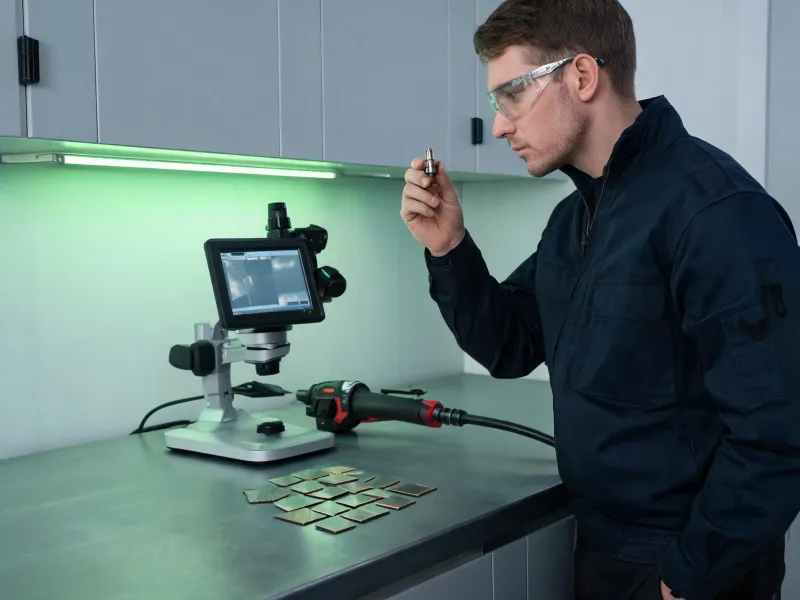
Assess TIG workflows →Application teams evaluate what happens after the cut: fit-up time, secondary grinding, consumable inspection and whether the cell can reproduce the same outcome on the next shift.
Identify grade, thickness, coating and surface condition before transferring a published setting into production.
Inspect the electrode and nozzle against a defined condition rather than changing parts only after edge quality collapses.
Record speed, acceleration limits, lead geometry and torch-height response with the actual nesting software and table.
Retain a coupon and inspection notes so bevel, dross and heat-affected edge expectations are visible to both shifts.
Published ranges do not remove the effects of air quality, input power, table rigidity, extraction or operator technique.

Hypertherm can structure a trial around the actual table, controller, gas or air supply and downstream operation. No performance claim is final until those conditions are represented.